
Why Water Damage Is So Common in Portland Homes
Portland's wet climate makes water damage one of the most common problems facing homeowners in the metro area. Between heavy winter rains, plumbing leaks, roof issues, and condensation from temperature changes, drywall throughout your home is vulnerable to moisture damage year-round.
Water-damaged drywall is more than a cosmetic issue. Left untreated, moisture behind drywall creates an ideal environment for mold growth, which can spread quickly and pose health risks to your family. It can also compromise the structural integrity of walls and ceilings, leading to sagging, cracking, and eventual collapse in severe cases.
Signs of Water Damage in Drywall
Catching water damage early minimizes repair costs and prevents more serious problems. Look for these warning signs throughout your Portland home: yellow or brown stains on walls or ceilings, bubbling or peeling paint, soft or spongy spots when you press on the wall, musty or earthy odors, visible mold growth, and cracking or sagging drywall.
Ceilings are particularly vulnerable because water from roof leaks travels downward and pools above ceiling drywall. If you notice a ceiling stain, especially after heavy Portland rains, it likely indicates an active leak that needs immediate attention. Even a small stain can represent significant moisture above the drywall.
In bathrooms, check the drywall around showers, tubs, and toilets for softness or discoloration. Bathroom drywall should be moisture-resistant (often called green board), but even this material can deteriorate over time if exposed to persistent moisture.
Repair vs. Replacement: When to Patch and When to Cut
Small areas of damage can often be repaired with a drywall patch. If the water stain is limited to a small area and the drywall behind it is still firm, a patch followed by priming and painting may be sufficient. This approach works well for nail holes, small dents, and minor water spots where the moisture source has been fixed.
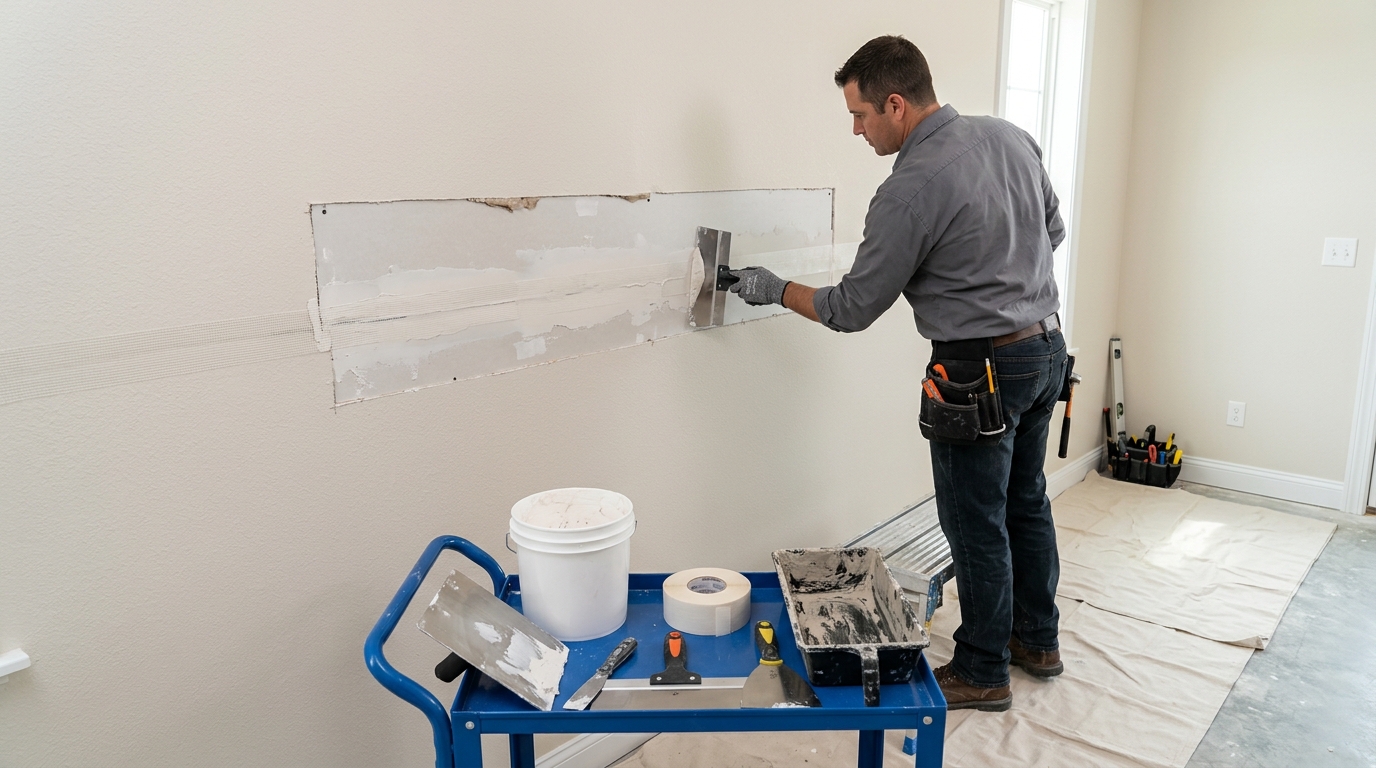
Larger areas of damage require cutting out the affected drywall and installing a replacement section. This is necessary when the drywall is soft, crumbly, or moldy, or when the damaged area is larger than about 12 inches across. The replacement piece is taped, mudded, and sanded to blend seamlessly with the surrounding wall.
If mold is present, the affected drywall must be removed and disposed of properly, and the framing behind it needs to be treated with a mold-killing solution before new drywall is installed. This is not a DIY project. Professional drywall contractors like The Mitchell Renovation Company have the experience to handle mold-affected drywall safely and thoroughly.
The Drywall Repair Process
Professional drywall repair begins with identifying and fixing the source of the water. There is no point repairing drywall if the moisture source is still active. This might involve fixing a roof leak, repairing a plumbing pipe, or improving ventilation in a bathroom or attic.
Once the moisture source is resolved, the damaged drywall is cut away and the area is inspected for mold or structural damage to the framing. If the framing is sound, a new piece of drywall is cut to fit, secured to the studs, and then finished with joint tape, joint compound, and sanding.
The finishing process typically requires two to three coats of joint compound with sanding between each coat to achieve a smooth, seamless surface. After the final sanding, the area is primed and painted to match the surrounding wall. When done correctly by an experienced professional, the repair should be completely invisible.
Preventing Future Water Damage
Prevention starts with maintaining your home's exterior and plumbing systems. In Portland, this means keeping gutters and downspouts clear, ensuring proper grading around your foundation, checking your roof annually for damaged or missing shingles, and inspecting plumbing fixtures for leaks.
Indoor humidity control is also important. Portland homes can develop high indoor humidity during the wet season, which leads to condensation on walls and windows. Using exhaust fans in bathrooms and kitchens, running a dehumidifier in basements, and ensuring adequate attic ventilation all help reduce moisture that can damage drywall.
The Mitchell Renovation Company provides drywall repair, water damage restoration, and painting services throughout the Greater Portland Area. If you have water-damaged drywall in your home, contact us at (503) 487-9301 for a free assessment and estimate. We serve Lake Oswego, Portland, Tigard, Beaverton, and surrounding communities.